Tempura
is a beloved Japanese dish known for its unique crispy texture and delicate
flavors. In this chapter, we will delve into the history, preparation
techniques, and cultural significance of tempura.
Origins
and Influences
Tempura has a fascinating history that showcases the culinary
influences on Japanese cuisine. While tempura is popularly associated with
Japan, it is believed that the frying technique was introduced by Portuguese
merchants in the 16th century. The Portuguese word "tempero," meaning
seasoning or condiment, possibly gave rise to the name tempura.
The Technique
Tempura is prepared by dipping seafood,
shellfish, meat, or vegetables in a light flour batter and deep-frying them to
a crisp golden brown. The batter is made by combining ingredients such as eggs,
flour, and cold water. Some variations may include soda water, baking soda,
cornstarch, or potato starch to enhance the crispiness of the coating.
Ingredients and Variations
Tempura showcases a wide range
of ingredients, including shrimp (ebi), fish, squid, scallops, mushrooms, sweet
potatoes, eggplant, and green beans. Each ingredient is carefully selected and
prepared to highlight its natural flavors and textures. The simplicity of the
batter allows the ingredients to shine.
Tempura ingredients
Vegetable Tempura
Tempura sauces
Cooking and Presentation
The frying process is crucial to
achieving the desired texture of tempura. The ingredients are swiftly
deep-fried in hot oil, ensuring they cook quickly and remain light and crispy.
Proper temperature control and timing are essential to maintain the delicate
balance between a crispy exterior and a moist interior. Tempura is typically
served immediately after frying to preserve its crispness.
Accompaniments and Serving Styles
Tempura can be enjoyed in
various ways. It is commonly served as a standalone dish, appetizer, or part of
a teishoku meal. In a teishoku meal, the tempura is served as the main entree
alongside a bowl of rice, miso soup, grated daikon radish, and other small side
dishes. Traditional sauces like tentsuyu, a dipping sauce made from soy sauce,
mirin, and dashi, or simple salt are often served alongside tempura.
Nagasaki Tempura
A notable regional variation of tempura is
Nagasaki Tempura. Originating from Namban cuisine, Nagasaki tempura
incorporates sugar into the batter and fries the ingredients in lard. The
batter itself contains seasoning, allowing the tempura to be enjoyed as-is
without additional sauces or condiments.
Tempura as an Art Form
The preparation of tempura requires
skill, precision, and a deep understanding of ingredient selection and frying
techniques. Tempura chefs aim to achieve the perfect balance of lightness,
crispiness, and flavor. The artistry lies in maintaining the natural flavors of
the ingredients while showcasing a beautifully crispy and golden exterior.
Cultural Significance
Tempura holds cultural significance
in Japan and is often enjoyed during special occasions, celebrations, and
festivals. It represents a harmonious balance between simplicity and
refinement, reflecting the core principles of Japanese cuisine. Tempura's
popularity has spread globally, with Japanese restaurants serving this beloved
dish worldwide.
Tempura is an iconic Japanese dish that
combines Portuguese influences with local culinary artistry. Its delicate,
crispy texture and subtle flavors have made it a favorite among food
enthusiasts worldwide. Whether enjoyed as a standalone dish or as part of a
traditional teishoku meal, tempura showcases the craftsmanship and attention to
detail that defines Japanese cuisine.
Tom Yum is a popular Thai soup known for its vibrant flavors
and aromatic ingredients. It can be prepared in different variations, including
Tom Yum Goong (with shrimp) and creamy Tom Yum
Tom Yum Goong, or Tom Yum Soup with Shrimp, is a delightful
Thai dish that offers a perfect balance of tartness, tanginess, and savory
flavors. It is relatively easy to make as long as you have a few key
ingredients like Thai chilies, lemongrass, lime leaves, and fish sauce [1].
This version of Tom Yum involves frying the shrimp shells and creating a quick
stock from them to infuse the soup with a rich shrimp flavor. The result is a
flavorful and satisfying soup that showcases the essence of Thai cuisine
Another variation of Tom Yum is the classic clear Tom Yum,
which can be made with whole fresh or peeled frozen prawns/shrimp. This version
is also simple to prepare once you have gathered the necessary ingredients. The
creamy Tom Yum is made using the same broth as the clear version but has a
creamy twist. Both variations offer a delightful taste experience and highlight
the distinct flavors of Thai cuisine.
What goes in Tom Yum Soup
There’s 2 parts to Tom Yum Soup:
- Making the soup broth;
- The stuff that goes in the broth.
Firstly, the broth. In addition to items shown below,
you also need the head and shell of the peeled prawns/shrimp (see image
below). If you can’t get whole prawns, don’t worry – in the recipe notes,
there’s directions for making this with frozen pre-peeled prawns!
Key to this soup broth are all the fragrant fresh herbs and
spices you see below. The kaffir lime leaves, lemongrass, galangal, chilli and
garlic. They impart such beautiful flavour into the soup!
And here’s the stuff IN the soup.
How to make Tom Yum Soup
The ingredient gathering is the hardest part of this recipe,
being that the aromatics aren’t pantry staples and depending how well stocked
your grocery store is, might require a trip to an Asian store.
The making part is very straight forward, calling for not
much more than plonking and simmering, straining, more plonking then simmering
again. EASY!
See? A lot of plonk and simmer above to make the broth.
And more plonk and simmer below when you add the “stuff”
into the soup.
That’s how you make the clear version of Tom Yum Soup which
I find is the one more commonly served at Thai restaurants in Sydney.
The broth looks deceptively simple – clear and unassuming.
But wait until you try it! It’s got terrific complexity of flavour from the
prawn/shrimp shells – basically it’s a homemade prawn stock with a ton of
aromatics added!!
CAN YOU FREEZE TOM YUM SOUP?
Yes, you can! What I like to do is make the
broth, strain it, then just cook the shrimp/prawns and freeze it like
that, before the mushrooms and tomato go in. But in fact, it would freeze fine
even with the tomato and mushrooms – I just feel it’s better adding them in
fresh later.
How to make CREAMY Tom Yum Soup
For the creamy version, you simply take the clear one, add a
good dollop of Thai Chilli paste then a splash of evaporated milk.
I think that people assume that the creamy version is made
with coconut milk, being an ingredient associated with Thai cooking. But it’s
not, it’s evaporated milk.
But coconut milk is also amazing – in fact, that changes Tom
Yum into Tom Kha soup and some people who sampled this preferred that the best!
Whichever
you choose – classic clear or the creamy version, you are going to love it. It
tastes 100% authentic, as good as you get at Thai restaurants. I exaggerate not
– some favourite takeout dishes are difficult or simply can’t be replicate at
home because we don’t have commercial grade equipment. And when that’s the
case, I’m very upfront about how close a homemade version can be
Tom Yum is a must-try dish for those who appreciate the bold
and complex flavors of Thai cuisine. Whether you choose the shrimp version or
the creamy variation, Tom Yum is sure to impress your taste buds with its zesty
and aromatic profile.
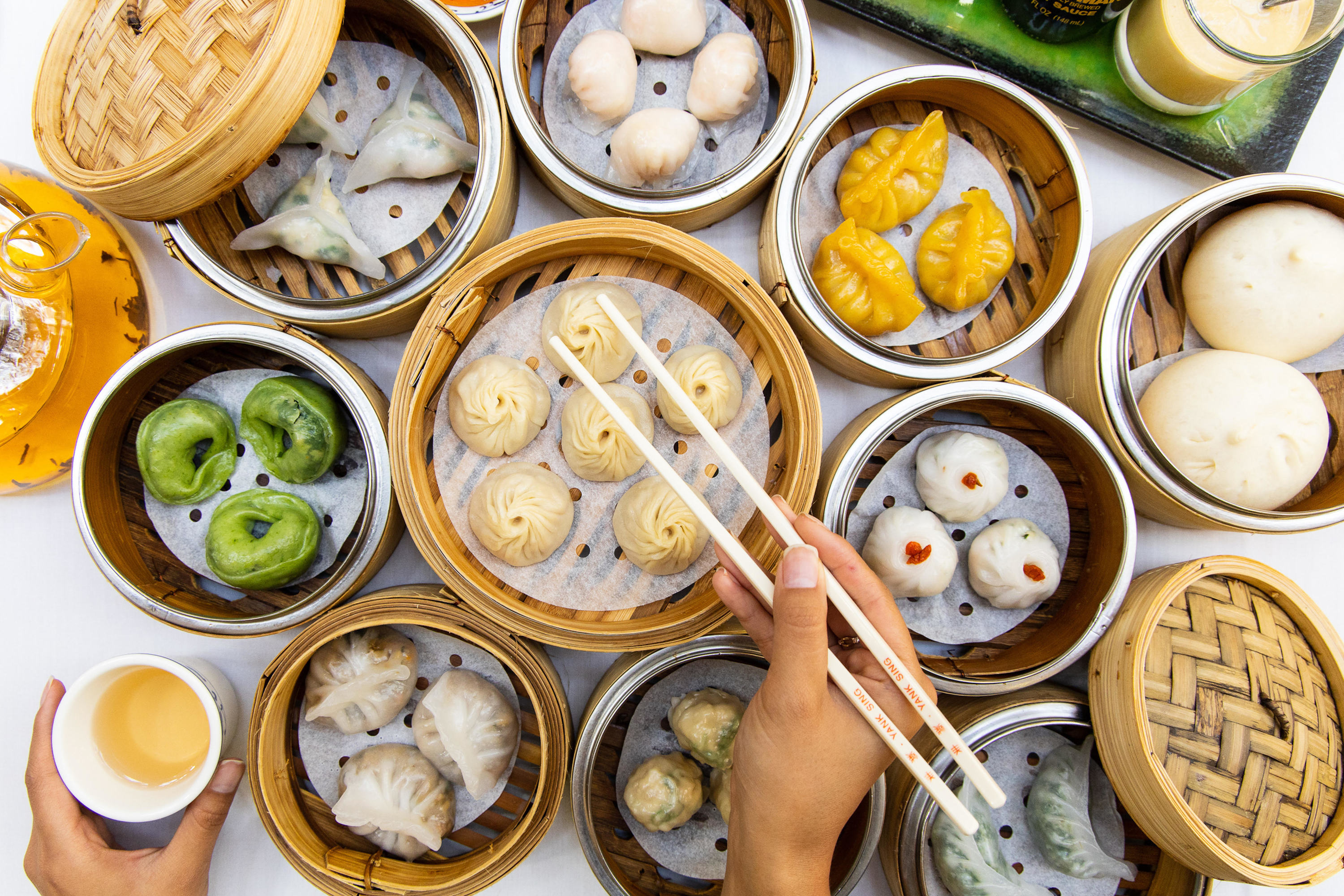
Dim sum is a traditional Chinese meal consisting of a
variety of small, bite-sized dishes. It originated in southern China's
Guangdong region and has become a popular culinary tradition around the world.
Here are some details about dim sum:
Definition and Origin
Dim sum is a collective term for a
broad assortment of hors d'oeuvres, snack-like foods, or small plates of
dumplings and other dishes. It is believed to have Cantonese origins and is
traditionally served for breakfast and lunch in Cantonese cuisine. Dim sum has
its roots in Guangdong, China, and eventually made its way to Hong Kong. It is
now a staple in Chinese restaurants globally.
Dining Experience
When enjoying dim sum, diners typically
gather at a restaurant during brunch hours. In traditional dim sum
establishments, small plates of food are served from rolling trolleys that pass
by diners in a constant procession. Diners can flag down the cart with the
desired food or mark their selections on a menu card and wave it in the air to
notify the server. This interactive dining experience allows diners to choose
from a wide range of dim sum dishes.
Assortment of Dishes
Dim sum offers an assortment of
seafood, meat, and vegetable dishes prepared in various ways. Some popular dim
sum dishes include:
Shumai (siu mai): Steamed dumplings typically filled with a
mixture of ground pork, shrimp, and mushrooms.
Shumai (siu mai)
Shrimp dumpling (har gow): Translucent, steamed dumplings
filled with shrimp.
Shrimp dumpling (har gow)
Soup dumplings (xiaolong bao): Delicate dumplings filled
with meat and a flavorful broth that bursts upon biting.
These are just a few examples of the many dim sum dishes
available. Dim sum allows diners to sample a variety of flavors and textures in
one meal.
Dim sum is a delightful culinary experience that offers a
wide range of flavors and textures in bite-sized portions. It is not only a
meal but also a social gathering where friends and family can enjoy a leisurely
brunch while sampling a diverse selection of delicious dishes.
Korean cold noodles, also known as naengmyeon, are a popular
dish enjoyed throughout the year in Korea. Naengmyeon noodles are typically
served cold and have a chewy texture that adds to the unique eating experience.
Naengmyeon is a specialty dish known for its refreshing and
cool flavors. It is often consumed during the hot summer months, but many
people enjoy it year-round. The dish consists of long, thin noodles made from ingredients
like buckwheat, sweet potato starch, or a combination of both. These
noodles are cooked and then served chilled.
There are two main types of naengmyeon: mul naengmyeon (물냉면)
and bibim naengmyeon (비빔냉면).
1. Mul Naengmyeon: Mul naengmyeon is served in an icy broth
made from beef or radish. The broth is often tangy and refreshing, flavored
with ingredients like vinegar, soy sauce, and mustard oil. It is commonly
garnished with sliced cucumber, Korean pear, and a boiled egg. Mul naengmyeon
is a popular choice for its cooling effect and savory taste.
Mul Naengmyeon
2. Bibim Naengmyeon: Bibim naengmyeon is a spicy variation of
cold noodles. Instead of the chilled broth, it features a spicy sauce made from
gochujang (Korean red chili paste) and other seasonings [2]. The noodles are
mixed with the sauce along with various toppings such as sliced vegetables,
boiled egg, and sometimes sliced beef or pork. Bibim naengmyeon offers a
flavorful and spicy option for those who enjoy a bit of heat.
Bibim Naengmyeon
Naengmyeon can be found at Korean restaurants both in Korea
and internationally. In Singapore, there is a restaurant called Noodle Star K
that specializes in Korean noodles, including naengmyeon.
If you want to try making naengmyeon at home, there are
recipes available online, including a detailed one on Maangchi's website.
The recipe provides instructions for both making the noodles and preparing the
accompanying broth or sauce.
Korean cold noodles, or naengmyeon, are a delicious
and refreshing dish enjoyed in Korean cuisine. Whether you prefer the cool
broth-based mul naengmyeon or the spicy bibim naengmyeon, these cold noodles
offer a unique and satisfying culinary experience.
Vietnamese Pho (Phở) is a popular and flavorful dish that has
gained international recognition. It is a traditional Vietnamese soup known for
its aromatic broth, tender noodles, and various toppings. Here is an
introduction to Vietnamese Pho based on the provided search results.
Pho is a staple of Vietnamese cuisine and is enjoyed by
locals and food enthusiasts worldwide. It is typically made with a slow-cooked
beef or chicken broth, which is infused with fragrant spices such as star
anise, cinnamon, cloves, and cardamom. The broth is the heart of the dish, and
its preparation requires careful attention to achieve a balance of flavors.
History:
The history of Vietnamese phở, a popular and delicious
noodle soup, is intertwined with the influence of French colonialism and the
culinary traditions of Vietnam. While there may be slight variations in the
accounts, the origins of phở can be traced back to the end of the 19th century
and the early 20th century.
One perspective, as mentioned above, states that the history
of phở began during French colonial rule in Vietnam. The increased demand for
beef by the French resulted in a surplus of beef bones in Vietnam. Chinese and
Vietnamese vendors saw an opportunity and utilized these beef bones to enhance
the flavor of their soups, particularly in Nam Định, a province east of Ninh
Bình and southeast of Hanoi. This is where the Nam Dinh broth, which forms the
basis of phở, started to develop and perfect its flavors.
The precise origin of phở is not known. However, it is
generally believed that its precursor appeared in Nam Định province. The
colonial French authorities had a preference for beef, which led to increased
beef consumption and, subsequently, the development of various beef-based
dishes, including phở.
Furthermore, there is evidence to suggest that phở existed
in Vietnamese villages even before the French colonial period. For example,
villagers in Vân Cù claim to have eaten phở long before the arrival of the
French. This suggests that phở likely evolved from similar noodle dishes that
were already part of Vietnamese culinary traditions.
In its modern form, phở emerged between 1900 and 1907 in
northern Vietnam, specifically in Nam Định province, which was a significant
textile market at the time. Over the years, phở has become one of the most
iconic and beloved dishes in Vietnamese cuisine, both in Vietnam and around the
world.
To summarize, the history of Vietnamese phở can be traced
back to the late 19th century and early 20th century, with the influences of
French colonialism and Vietnamese culinary traditions. While the exact origins
may not be fully definitive, it is clear that phở has evolved and gained
popularity over time, ultimately becoming a cherished dish in Vietnamese
cuisine.
Pho has inherited & developed the traditional cuisine
At the beginning of the 1950s when the French Colony divided
Vietnam into 2 parts, Pho made its way to Saigon in South Vietnam. Then, Pho
started to have a lot of variants. Up to now, there are three distinctive pho
cultures which shaped by the Vietnamese turbulent history including Phở Bắc
(Northern Recipe), Phở Huế (Central Vietnam Recipe), Phở Sài Gòn (Southern
Vietnam Recipe). Generally, Pho Bac is characterized by the taste of salty. Pho
Bac remains purity and rusticity that reflects the sensibilities of the
Hanoian. Meanwhile, the Pho of South Vietnam often tastes sweeter, spicier
because the South people prefer sweets sweet. The rice noodle of Pho Saigon is
thinner that of Pho Bac. When making its way to the South, Pho became more
customizable with the special condiment, variant sauces, and piles of fine
herbs and vegetables. Therefore, Pho looks more polished and colorful which is
more like the capitalist city is being a rising star.
In the beginning, there was only beef Vietnamese noodle
served with beef brisket, beef plate, beef shank, tenderloin which were done to
a turn. After that, people enjoy pho with rare beef tenderloin, chicken, and
pork. Besides, there are many delicious dishes made from the Vietnamese rice
noodle which are popularly welcomed such as stirred noodle, fried noodle ( phở
xào), deep-fried noodle (phở chiên), browned noodle (phở rán), and so on.
Pho reflects the essence of Vietnam – an agricultural
country
The main ingredient of pho is the soft noodle which is
thoroughly made from the rice. Vietnam is an agricultural country for a
thousand years; therefore, rice plays a vital part in the normal life of people
as well as the development of the country. Eating rice and cuisines made from
rice such as noodle soup (phở), bun (bún), steamed roll rice pancake
(bánh cuốn), and sticky rice cake (bánh chưng) becomes a highlight of
Vietnamese cultures. In addition, pho is a typical cuisine due to its purity
and its harmonious harmony combination of many traditional ingredients which is
characteristic of Vietnamese cuisine. Pho is also served with many special
herbs which can be hardly found anywhere but Vietnam. Last but not least, when
enjoying pho people often drink some small cups of rice wine which is also a
specialty of the agricultural countries.
What’s more, it’s the ritual thing that eating pho in the
early morning gets the foreign visitor to the groove of what Vietnam is about.
Vietnam is a morning country. It’s also a country of hard-working farmers who
wake up early in the morning to grow rice and contributing to the development
of Vietnamese agriculture.
Vietnamese people eat pho all day long
Thanks to its delicious taste, nutrition, and reasonable
prices, Pho is a favorite of Vietnamese people all day long. Vietnamese people
eat pho as breakfast, enjoy pho at noon, choose pho as a snack after the hard
working day, and drop in a small restaurant to enjoy a hot bowl of Pho with
their friends when the night has fallen.
Pho is cooked and sold in every corner of Vietnam. From the
busy city to a peaceful village can you find a vendor of pho. Pho is
served in both luxury and mediocre restaurants. In addition, it’s easy to find
you countless vendors and food stalls serving pho along the street and even in
the commercial buildings. In big cities like Hanoi, Ho Chi Minh City, and
Danang there are a great number of open-air storefronts along the street selling
pho from the early morning until midnight. They often sell Pho to the
middle night to serve some workers coming home late at night.
Vietnam is the rising star with the economy used to be
described by Bloomberg as one of the fastest-growing markets in the world. As a
consequence, the number of businessmen businessman and busy people increases
quickly and steadily. To save time and stay healthy, those people often drop in
the nearby restaurant to have lunch and many of them choose pho. This fact
opens more and more opportunities for pho vendors to develop and meet the
growing demand.
Pho is considered the culinary rhythms
It’s not a coincidence that people call Pho the culinary
rhythms of Vietnam. Behind its special name is a story. In the past, in some
small cities and little towns town, you also can find some people carry on
their shoulders “a small restaurant” full of things to serve pho. Now, people
often use vendor trolley. To notify people of their appearance, those food
vendors often make the street cries and make the sound “Clang, Clang”. Such
normal sounds have imprinted in the mind and soul of many people and reminded
them of the home country.
Pho helps people warm up in the cold days
In a tropical monsoon climate like Vietnam, the best time to
enjoy a hot bowl of pho is the morning or at midnight. If it happens to you to
travel to Vietnam from the end of October to the beginning of April, don’t
forget to visit Hanoi to enjoy the cold of this city. Then, take a seat near
the warm flame and slurp the noodle which is hot, a bit chilly to warm you up.
This experience will be memorable and helps you to understand more about the
lifestyle of the people in Hanoi.
Pho helps people feel better when they’re sick
As mentioned above, Pho is a harmonious harmony combination
of many traditional and healthy ingredients. The noodle made from rice is a
good source of carbohydrate. In addition, the broth made by simmering the bone
of beef, chicken or pork is good for health. Especially, pho is served with many
fine herbs which are proved to be able to of helping people feel better such as
ginger, mint, and spring onion.
Pho is the essence of Vietnamese traditional cuisine. It not
only contributes to the abundance of Vietnamese cuisine but helps many of Vietnam
people to make money. Besides, Pho is also a pride of the Vietnamese people.
Nowadays, the Vietnamese have introduced Pho to global friends and brought
pho into the world.
The main components of Vietnamese Pho include:
1. Broth: The broth is the soul of Pho. It is simmered for
hours to extract rich flavors from the bones, meat, and spices. Beef broth,
known as "phở bò," is the most popular variation, while chicken
broth, known as "phở gà," is also widely enjoyed. The broth is
typically clear and deeply savory.
2. Rice Noodles: Pho features flat rice noodles, known as
"bánh phở," which are cooked separately and added to the bowl before
pouring the hot broth over them. The noodles are soft and chewy, providing a
satisfying texture to the dish.
3. Protein: Pho can be served with various protein options,
with thinly sliced beef (such as eye-round steak or brisket) being the most
common choice. Other protein options may include chicken, or vegetarian
options like tofu or mushrooms.
4. Toppings: Vietnamese Pho is traditionally served with a
plate of fresh herbs and condiments that allow diners to customize their bowls
according to their preferences. Common toppings include bean sprouts, Thai
basil, cilantro, lime wedges, sliced chili peppers, and hoisin sauce or
Sriracha for added flavor.
Traditional Vietnamese Pho
Gia Lai dried Pho (Gia Lai is a province in Vietnam)
To make crispy rice noodles, people cut the rice noodle
layers into many equal three-by-three square. Then they quickly deep-fry the
rice noodle in hot oil until the rice noodle has a deep golden color on all
sides and inflates like a pillow. Afterward, people cure beef meat with spicy,
garlic, and other sauce and condiment. Then, they stir-fry beef meat quickly
with colorful vegetables and soy sauce. Finally, they put the crispy rice
noodle pillow on the plate and then put the stir-fried meat on the rice
noodle. This variant of Pho is very crispy, savory and delicious.
Crispy Fried Rice Noodle “Pillow”
2. Phở xào – Stir-fried rice noodle
This variant of pho is much easier to make than crispy rice
noodles. People just heat oil in the pan, add onion and stir-fry until they
smell good and turn translucent. Put the rice noodle until it’s really heated
up, then seasoning to enhance the flavor. After that, they stir fry beef meat
which is cured with ginger, garlic, leek, and celery. The vegetable stir-fried
with the beef varies from recipe to recipe. Phở xào or stir-fried rice noodle
is fattier but still yummy and worth trying.
Stir-fried rice noodle
3. Phở chua Lạng Sơn – Sour Rice Noodle Soup, a specialty of
far Northern Vietnam
Phở chua (Pho chua) is a little more complicated to make
than other variants of Pho . The ingredients to make Pho chua includes
Vietnamese rice noodle, sweet potato, char siu, pork liver, fried spring onion,
peanut, cucumber, Chinese sauce, and xung xa which is the specialty of Lang Son
– the province in far northern Vietnam
Sour Rice Noodle Soup
4. Phở khô Gia Lai – Dried Rice Noodle, a specialty of
Central Vietnam
Phở Khô (Pho Kho (dry)) represents the essence of the culinary
culture of Gia Lai Province in the Central Highlands of Vietnam. The difference
of Pho kho is that the rice noodle and broth are served separately. The
rice noodle is thinner and longer. When put into the boiled water, the rice
noodle is a bit tender instead of being soft and soggy like other rice noodles.
There are two main types of Pho kho including chicken dried noodles and beef rice
noodles. Chicken dried rice noodle is served with shredded chicken meat,
stir-fried chicken giblet, chopped fired pork, and pork rind
Dried Rice Noodle
5. Phở cuốn – Vietnamese Spring Roll
To the foreign people, Phở cuốn (Pho cuon) or
Vietnamese Spring Roll is much more popular. Unlike other variants of pho, the
spring roll is no need to cook. All the things you have to do to enjoy spring
roll is used the hand to roll the rice noodle layer with the pre-prepared
ingredients. A typical spring roll often includes stir-fried beef meat or pork
meat depending on your choices, pineapple, green banana, green mango, star
fruit, soft rice noodle (bún), and many types of fresh herbs. Vietnamese spring
roll is used with very special sauces made from shrimp. If it happens to you to
visit Vietnam, don’t miss out to try preparing Vietnamese spring roll and enjoy
it by yourself.
Vietnamese Spring Roll
How to eat Pho Vietnam
Pho provides you with an interesting lens to look into
Vietnamese cuisine. To enjoy the fullness of the flavor of Pho, Vietnam, you
should eat pho like a typical Vietnamese person. To do so, let’s follow all the
steps below:
Step 1: Find a food vendor or food stall serving pho.
You can trust the suggestions of the locals because “Look
for where the ladies eat. They know where the good food is” is the right
quotation.
Step 2: Take a seat and pace yourself.
Such restaurants often extend out to the sidewalk with the
small plastic chair and squat tables; therefore, you need to be quick enough to
find a comfortable seat
Step 3: Choose what types of Pho to eat.
If you have no idea, let’s have the check on this list:
Chicken Noodle Soup (Phở Gà): served with chicken meat
(brisket) which is shredded, the chicken leg which is sliced.
Rare Beef Vietnamese Noodle Soup (Phở bò tái): Noodle soup
with the slices of rare beef
Pho tai nam: Noodle soup with slices of both rare beefsteak
and beef flank
Well done Beef Noodle Soup (Pho chin): Noodle soup with
slices chewy, tender lean beef brisket
Meatball Noodle Soup (Pho bo vien): Noodle soup with springy
beef meatballs
Spicy Noodle Soup (Pho cay): Noodle soup with slices of beef
meat and a lot of special spicy sauce
Pho sach bo: traditional noodle soup served with beef tripe
Seafood Noodle Soup (pho hai san): Noodle soup with many
types of seafood such as shrimp and crab
Step 4: Enjoy the bowl of pho like a Vietnamese.
When the service staff brings the noodle to you, get ready
by cleaning the chopstick and spoon by tissue and the juice of the kumquat. It
sounds weird but almost Vietnamese people do so. Then, squeeze the lime on the
spoon, remove all the lime seeds, and sprinkle the lime juice onto your bowl of
pho. You also need to add some chopped chili, spicy sauces, and a mixture
of garlic and vinegar. You can add some fish sauce to make pho saltier.
Then, hold the chopsticks in one hand, hold the soup spoon
in the other hand, then mix the noodle quickly and get ready to enjoy it.
Let’s start enjoying pho with a sip of broth. Then take a
deep to feel the sweet, fatty of the broth. Remember to be careful because the
broth is very hot and sometimes very spicy if you put too much chili and sauce.
When to eat Pho:
In Vietnamese culinary culture, phở is commonly consumed as
a breakfast dish. It is believed to provide a nourishing start to the day,
especially due to its flavorful broth and filling ingredients. Many phở
restaurants in Vietnam open early in the morning to cater to those seeking a
hearty meal to kickstart their day.
That being said, phở is not limited to breakfast and can be
enjoyed throughout the day. It is a popular choice for lunch and dinner as
well. Vietnamese people often gather with friends or family at phở restaurants
to share a meal and enjoy the rich flavors of the soup together.
Vietnamese Pho can be found in Vietnamese restaurants
worldwide, and Singapore is no exception. Little Saigon, located in Clarke
Quay, is one of the places where you can enjoy well-executed Vietnamese
culinary delights, including beef Pho.
If you're interested in trying your hand at making
Vietnamese Pho at home, there are numerous recipes available online that
provide step-by-step instructions on creating the broth, cooking the noodles,
and assembling the bowl with toppings.
Vietnamese Pho is a comforting and delicious soup that
showcases the harmonious blend of flavors in Vietnamese cuisine. With its
aromatic broth, tender noodles, and customizable toppings, it has become a
beloved dish enjoyed by many.
Kimbap, also known as gimbap, is a popular Korean dish that
consists of cooked rice, vegetables, fish, and meat rolled in dried seaweed
sheets called gim. It is served in bite-sized slices, making it a convenient
and delicious snack or meal option. The dish is often compared to Japanese
norimaki, but its origins are still debated.
The ingredients used in kimbap are distinct and specific to
the dish. They can include marinated vegetables, fried egg, ground meat, fish
cake, and more. One interesting aspect of kimbap is that the ingredients are
chosen to represent a spectrum of colors, creating an appealing visual
presentation along with a flavorful experience.
To make kimbap, you start by preparing the rice and
seasoning it with a pinch of salt. The pickled radish is then cut into strips,
usually about 1/2-inch thick. Eggs are cracked, beaten, and seasoned with a
pinch of salt. The beaten eggs are cooked in a non-stick pan over medium-low
heat.
While the specific number of kimbap variations may vary,
there are common types that are widely enjoyed. These variations can include:
1. Traditional Kimbap: The traditional kimbap usually consists
of a combination of cooked rice, pickled radish, carrots, spinach, eggs, and
various ingredients like ham, beef, or fish cake. It is a versatile dish, and
the filling options can be customized to personal preferences.
Traditional Kimbap
2. Tuna Kimbap: Tuna kimbap is a popular variation that uses
canned tuna as the main ingredient. The tuna is often mixed with mayonnaise and
seasoned before being rolled with the rice and other vegetables. It is a
delicious and satisfying option for seafood lovers.
Tuna Kimbap
3. Cheese Kimbap: Cheese kimbap is a modern twist on the
traditional version. It includes cheese as one of the primary ingredients,
along with the usual fillings. The addition of cheese adds a creamy and savory
element to the rolls.
Cheese Kimbap
4. Vegetable Kimbap: As the name suggests, vegetable kimbap is
filled with a variety of fresh and cooked vegetables. It is a
vegetarian-friendly option and can include ingredients such as cucumbers,
carrots, spinach, and more.
Vegetable Kimbap
5. Kimchi Kimbap: Kimchi kimbap incorporates the beloved Korean
staple, kimchi, into the rolls. Kimchi adds a tangy and spicy flavor to the
kimbap, creating a unique and delicious taste.
Kimchi Kimbap
These are just a few examples of the different types of
kimbap available. The fillings can be customized based on personal preferences
and regional variations. Kimbap is a versatile dish that allows for creativity
and experimentation with ingredients.
How to make kimbap
Kimbap is a versatile and tasty Korean dish that
combines various ingredients to create a flavorful and visually appealing roll.
Its popularity has spread beyond Korea, and it is now enjoyed by people around
the world.
Vietnamese banh mi (bánh mì) is a popular and delicious sandwich that
has gained recognition on the global culinary map. It has an interesting
history and a wide range of variations. Let's dive into the world of banh mi:
In September 2022, the banh mi was officially added to the
Merriam-Webster dictionary. Around the same time, CNN travel included the banh
mi in the top 23 of the world’s best sandwiches, reflecting its popularity and
reputation. Although available worldwide, eating the Vietnamese sandwich in its
hometown is something you cannot miss.
Banh mi is a culinary creation that evolved in Vietnam over
the past two centuries. It originated from the influence of French colonization
when baguettes, known as "Western bread" at the time, were introduced
to Vietnam. Through a fusion of French and Vietnamese flavors, techniques, and ingredients,
banh mi emerged as a unique and iconic Vietnamese sandwich.
Many Vietnamese historical records cited that the
breadsticks, or baguettes, traveled with the French expeditionary force to
Vietnam in the 1850s. The ready-baked baguettes, which are the main staple food
of the French, were certainly not enough to feed all the soldiers for months at
sea; hence, baguettes were probably made on-site wherever the troops settled.
Why is it called the banh mi?
When baguettes first appeared in the North, they were
referred to as “Western bread” since, obviously, they were made for the French
people. However, in the South, back then, people already called the French
baguettes by the name banh mi. One explanation is that, in Vietnamese, “banh” refers
to any food made from flour, especially by baking, and “mi” is the
shortened form of bot mi (bột mì) – or wheat flour. So, banh mi literally
means a cake made from wheat flour. Another hypothesis is that the banh mi
resembles the sound of “Pain de mie,” which means white bread in French.
Regardless of the reason behind this, the banh mi is now a universally official
name for this Vietnamese baguette.
When did the Vietnamese banh mi get its shape?
It is a long journey for the banh mi to come from long,
thin, and crusty baguettes to the Vietnamese bread you see today.
When first arrived, the banh mi was a classic French
baguette – a long, narrow loaf of bread, and was only eaten at a dining table
in Western style. The first attempt to make it was with brick ovens, built in
the traditional French style and heated by coal or wood (much resembles pizza
wood ovens).
In the 1910s, when World War I broke out, food scarcity
happened worldwide. Local bakers had to make changes to the recipes by adding
rice flour to make up for the shortage of wheat flour. Adding to that, the way
Vietnamese bakers constructed their ovens with local building materials allowed
the moisture to stay inside longer. The mixture of wheat and rice flour and the
sealed structure of the baking ovens resulted in a softer and airier texture
inside while thinner and crustier outside the banh mi.
Following the economic recession, the banh mi was first cut
into smaller pieces and then made shorter and smaller to lower the price and to
be ready to eat on the way. This significantly marked the transformation in the
shape of banh mi, retaining its appearance until the modern days.
How the banh mi became loved by the Vietnamese?
You may expect it or not, in the 19th century, when the banh
mi first arrived during the high time of French colonialism, it was boycotted
by the Vietnamese patriots and consumed mostly by the French, Vietnamese upper
classes, and people working in the French governing body.
In the early 20th century, the banh mi adverts appeared for
the first time in newspapers and flyers, spreading their popularity among
locals. French bakeries made their way further south to My Tho, Ben Tre, and
all the way to Can Tho. Although the banh mi at this time was still a “luxury”
good, it was no longer an “exotic” food in the local’s eyes. It was made in
larger quantities and always available to be bought freshly.
In the early 1930s, together with the growing familiarity,
the banh mi also became more affordable for ordinary people. They were no
longer just a staple to serve with French omelets on a dining table with forks
and knives, but more a takeaway snack or a dry treat on long trips.
In the 2000s, when Saigon underwent explosive development, people
from far-flung corners of Vietnam flocked to this city, which was praised as
the “Pearl of the Far East,” to gaze at it in wonder. One of the intimate
images of the banh mi at that time still engraved in our minds is the bamboo
basket stacked with hot, crispy bread covered under a large sack. These baskets
could be seen tied on the back of a street vendor’s bicycle, placed on the
sidewalks, or lined up in front of the bus stations – where they were sought
after as a Saigon specialty for souvenirs. Every time the sack was lifted off,
the buttery and warm fragrance of hot, fresh banh mi filled the air, and no one
could resist but eat the bread right away without any side dishes or toppings.
Eating “banh mi khong,” hence, became a huge part of Vietnamese banh mi
culture.
In our childhood memory, whenever there was someone in our
little town traveling to Saigon, the villagers, from children to seniors, could
not hide the excitement of receiving banh mi Saigon as gifts. We sat
together while our parents tore it into pieces and distributed them to us,
excited kids. That’s what we’ve grown up with and how the banh mi became
indispensable in our life.
So, after two centuries of presence and integration, the
banh mi has made its way into Vietnamese people’s lives and become a part of
our regular diet, something we cannot live without.
The banh mi ingredients
Eating the banh mi is truly an exciting culinary experience.
The incredible combination of crispy bread, soft cold cuts and meat, crunchy
pickles, and fresh herbs will take you through different layers of the sense of
taste. A typical loaf of banh mi consists of the ingredients listed below for
reference:
1. Banh mi bread: Made from high hydration dough and high
protein flour, which creates a perfectly light and soft bread with a
beautifully caramelized crispy crust.
2. Butter: Made by beating egg yolks with cooking oil, lime
juice, salt, and sugar. It has a melted butter texture but is creamier in
taste.
3. Pâté: Made from pork liver. The finished pâté is smooth in
texture and extremely rich in flavor.
4. Vietnamese cold cuts: This could have its own section;
however, the most popular cold cut used in the banh mi is “cha lua” –
a Vietnamese pork sausage roll. It consists of well-seasoned ground pork
wrapped in banana leaves in the shape of a sausage roll and boiled until fully cooked.
Another common option is the Vietnamese jambon, also known as red cold
cuts (thit nguoi do). This includes lean pork and pork skin seasoned with
black pepper, wrapped in a piece of pork skin and steamed until well cooked.
5. Pickles and vegetables: Usually include pickled carrot and
white daikon julienne cuts, combined with sliced cucumber, fresh coriander,
green onions, and fresh chilies.
6. Sauce: Soy sauce and homemade tomato sauce are usually the
final touch for a loaf of banh mi.
The ingredients are added in the order mentioned, and they
will surprise and satisfy you with their perfect blend of textures – crispy,
crunchy, and soft – and how their tastes complement each other so perfectly.
Most of the ingredients are homemade, so despite being made from the same
ingredients, the banh mi tastes vary from vendor to vendor, making it a unique
experience every time you try it.
Types of the banh mi
There are countless variations of the banh mi categorized by
fillings that vary widely and uniquely across regions, with just the banh mi
loaf as the main ingredient. Now, let’s travel southwards and take a look at
six popular and iconic versions of this sandwich that have greatly contributed
to putting it on the global cuisine map.
Banh mi chao Hanoi
Banh mi chao Hanoi
In Hanoi, one of the most
popular ways to eat the banh mi is to serve it with a small pan of sizzling hot
toppings, which explains the name banh mi chao. This is thought to be
inherited from the French eating culture, with the banh mi and toppings served
separately and eaten with a knife and fork.
So what is in the pan? First of all, pâté, a lot of pâté,
silky-smooth and rich pâté. Then, some French fries, a sunny-side-up egg,
Vietnamese ham, and sausage are traditionally a must, sided with sliced
cucumber and finally topped with green onions and coriander. The options go on
forever with the personal touch of the chef. However, the secret of this combo
lies within the flavorful and iconic sauce in which all the ingredients are
cooked. It is basically tomato sauce, but well-seasoned (sometimes with some
wine) according to the Hanoian palate, that really wakes up your appetite.
Banh mi bot loc Da Nang
Banh mi bot loc Da Nang
You will be surprised to find out what this banh mi is
about. Besides its beautiful long-stretching coastline, Da Nang is famous
for banh bot loc – clear tapioca shrimp and pork dumplings. Savory
shrimp and pork belly are covered in translucent, soft, and chewy dumpling skin
and eaten with sweet and spicy fish sauce. We love the banh mi, and we
love banh bot loc, so why not merge them together? And there, we
have banh mi bot loc: baby dumplings are stuffed in a banh mi, with some
greens and chili paste added. You can expect crispy bread outside and a
surprisingly good explosion of tastes inside.
Banh mi cha ca Nha Trang
Banh mi cha ca Nha Trang
Being known for its abundant source of seafood, Nha Trang takes
advantage of their specialty, which is fish cakes, and adds it to the
availability of the banh mi to create a tasteful and iconic sandwich. The
highlight of this version is obviously the fish cakes which are often made from
mackerel fillets. Minced fish is shaped into pies before being deep-fried until
they get the shiny caramelized color. Fish cakes are then cut into bite-size
cuboids and stuffed in the banh mi with cucumber, green onions, lots of crispy
fried shallot, and chili paste. The sandwich, with its texture from the land
and fish cakes with the scent of the sea, would be an unforgettable cuisine
experience.
Banh mi Hoi An
Banh mi Hoi An
For most visitors, when it comes to the Vietnamese
sandwich, banh mi Hoi An probably the first one that springs to their
mind. It was featured on national Korean TV shows and by many well-known food
reviewers and famous figures. But its popularity is well-deserved. The most
important element of a good sandwich is, of course, the banh mi itself.
In Hoi An, the
banh mi is marked with a unique shape, smaller and pointier on the two sides
compared to other parts of the country. They are always freshly baked, so the
crust outside is super crispy while the inside remains moist and soft.
It is commented that banh mi Hoi An is outstanding
thanks to the diverse fillings, ranging from homemade garlic puree and barbeque
pork to something distinguished like tuna. The fillings are a well-balanced
combination of tender and juicy meat, fresh and crunchy green papaya and veggies,
and a hint of spiciness and sweetness from the chili paste, which is Hoi An’s
specialty. We’re sure you won’t have enough of it.
Banh mi thit nuong Saigon
Banh mi thit nuong Saigon
Ho Chi Minh City (Saigon)
locals have a love for thit nuong, or chargrilled pork of any kind. From
grilled pork with broken rice (com tam thit nuong) and grilled pork
with rice vermicelli (bun thit nuong) to grilled pork with sticky
rice (xoi thit nuong), it’s no surprise that banh mi thit nuong (grilled
pork stuffed in the banh mi) has made its way to the list.
Minced pork is marinated with a mixture of lemongrass,
honey, and other seasonings. It’s then formed into meatballs or rolled around
bamboo sticks, then chargrilled until the smoky aroma from the lemongrass fills
the air and the pork remains juicy and moist from the steaming pork fat. The
chargrilled pork is then stuffed in a banh mi, along with pickled carrots and
daikon, fresh cucumber, coriander, and a drizzle of BBQ sauce.
Banh mi xiu mai Dalat
Banh mi xiu mai Dalat
Dalat has
become a sought-after holiday destination, not only for locals but also for
world travelers, and its highland culinary delights play a huge role in its
growing popularity. Within the Vietnamese community, banh mi xiu mai is
a must-try, proof that one has been to Dalat. It is not a typical banh mi
filled with fillings. Xiu mai are small meatballs made from minced
pork and wood-ear mushrooms. In the misty and chilly weather, there’s nothing
better than fresh banh mi served with a small bowl of xiu mai, chewy pork
skin, steamed pork sausages, and topped with coriander. The warmth of the xiu
mai soup and the heat from the added minced chilies are probably what
sets banh mi xiu mai apart. When eating, we tear the banh mi into
small pieces and dip them in the xiu mai soup, complementing it with
bits of meatballs.
The meatballs are completely homemade by the
lady owners using their own recipes, so they vary from vendor to vendor, making
the experience more personal and unique. And don’t forget to get hot soy milk.
The eating culture of the banh mi
Best drink to pair with the banh mi: Since the sandwich is a
bit dry, it’s ideal to have a drink on its side. The banh mi is best combined
with an iced black coffee or milk coffee (ca phe den da or ca phe sua da).
This is also the iconic and classic Vietnamese breakfast combo.
The go-to option: Just like other Vietnamese Dishes, a broad range of banh mi toppings can be overwhelming and leave you
confused about which one to go for. A thap cam – mixed combo – will
be a good place to start. It comes with everything the dish offers, so you can
have a full picture of what the dish is like and pick out your favorite
toppings for the next order.
When to eat: The banh mi is typically eaten in the morning
for breakfast due to its filling quality and portability. It is a perfect
energy boost, fueling you for a long exploring day. However, feel free to have
it for lunch or dinner or at any time you would like to. Personally, we love
this sandwich so much that we can eat it every day for several days in a row.
The banh mi as a sweet treat: If you ask any Vietnamese,
they will tell you about the pleasure of dipping the banh mi in condensed milk
and eating it straight. It may sound strange, but the sweet, creamy milk
somehow just blends perfectly with the banh mi texture, making it such a
satisfying combo that we are privileged to grow up with. Apart from eating with
condensed milk, you can also find air-dried banh mi coated with white sugar,
which is super crispy and fun to eat.
Welcome to our delectable world of flavors! Indulge in the tantalizing journey of our food blog, where we uncover culinary treasures and share mouthwatering recipes that will awaken your taste buds. From delightful desserts to savory dishes, join us as we explore the vibrant world of gastronomy, offering a delightful blend of culinary inspiration, tips, and delightful stories that will ignite your passion for cooking and eating. Get ready to embark on a culinary adventure that will leave you craving for more. Bon appétit!
, click here →
Newsletter
Get All The Latest Updates Delivered Straight Into Your Inbox For Free!





 Hello, my name is Jack Sparrow. I'm a 50 year old self-employed Pirate from the Caribbean.